Information and training
Provide current operating, maintenance and safety information for Feeder Tracks and Presentation Tooling, plus settings, software backups, training and any outstanding actions.
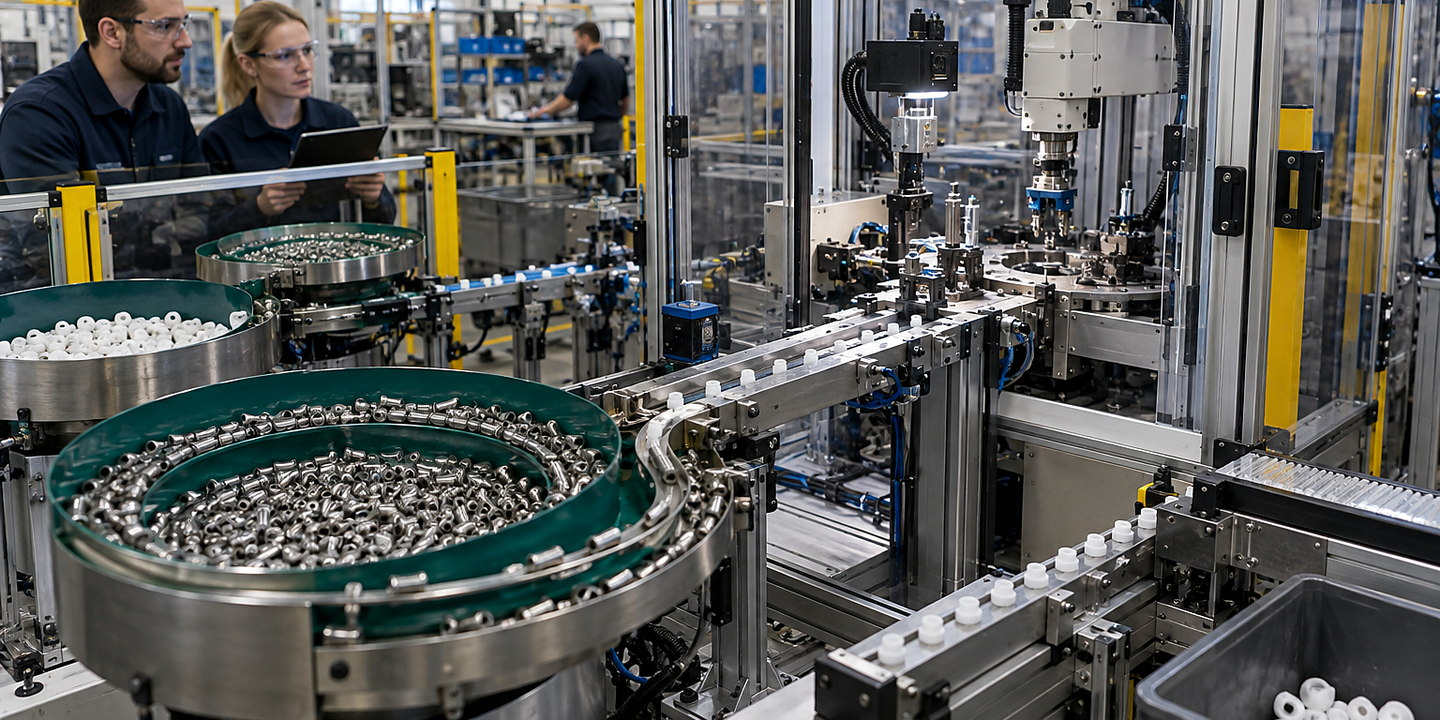
Plan documentation, training, spares, maintenance and change control for feeder tracks and presentation tooling.
Reliable support for feeder tracks and presentation tooling starts with safe access, clear diagnostics, controlled settings, maintainable parts and information your team can use.
Your support plan should match the people responsible for bulk presentation using feeder tracks and presentation tooling, the production risk and the response your site needs.
Plan feeder tracks and presentation tooling around real component variation, bulk condition, orientation, usable delivery rate and the downstream interface. Discuss representative part trials with Sorting Solutions. Plan the information, access and response needed to keep your operation running safely and consistently.
Discuss your application

Provide current operating, maintenance and safety information for Feeder Tracks and Presentation Tooling, plus settings, software backups, training and any outstanding actions.
Set inspection, cleaning, calibration where applicable and wear-part tasks around escapement and downstream pick interface.
Give the people responsible for bulk presentation using feeder tracks and presentation tooling clear fault information, safe diagnostic access, escalation routes and a controlled restart.
Review new products, parts, software, materials or rates before altering settings that affect jam, damage and recovery acceptance checks.
Record the current operating state, active recipe, recent material or variant change and the condition of component geometry and variation for feeder tracks & presentation tooling.
Use the approved isolation or intervention method for bulk presentation using feeder tracks and presentation tooling; never defeat a safeguard or force an output to shorten diagnosis.
Use the documented recovery sequence for Feeder Tracks and Presentation Tooling, confirm the first accepted output and retain the fault and action record for trend review.
A new variant or higher rate can alter component geometry and variation for feeder tracks & presentation tooling, surface, fragility and entanglement behaviour, bulk condition and replenishment method, required orientation and delivery rate, escapement and downstream pick interface, and jam, damage and recovery acceptance checks. Record the change, assess consequences and repeat the relevant trial or validation rather than assuming the previous result transfers.
A jam at the same location is useful evidence, but it does not automatically mean the track needs widening or more drive. Record the part condition and where the first deviation occurs before an authorised change.
Observe the transfer into the track, the accumulated queue and the final escapement separately. Compare a correctly presented part with the first part that tips, overlaps or stalls. Photograph its orientation after the machine has been made safe; the downstream pile-up may be a consequence rather than the original cause.
Compare the current production batch with retained reference samples and the recorded tooling revision. Look for a changed burr, coating, dimension or contact surface as well as wear. Reworking the track to accommodate an out-of-scope part can make the approved component less reliable.
Keep drawing revisions, locating features, wear-part identification and approved settings together. After repair, verify the physical datum at the receiving tool rather than only the track outlet. Avoid undocumented local filing or adjustments that leave the next technician unable to reproduce the accepted arrangement.
Use a safe agreed trial to include a full queue, an empty track and a restart after the receiving machine pauses. Record single-part release and any surface marking. This confirms that the repair supports the production sequence, not merely free movement during an unloaded demonstration.