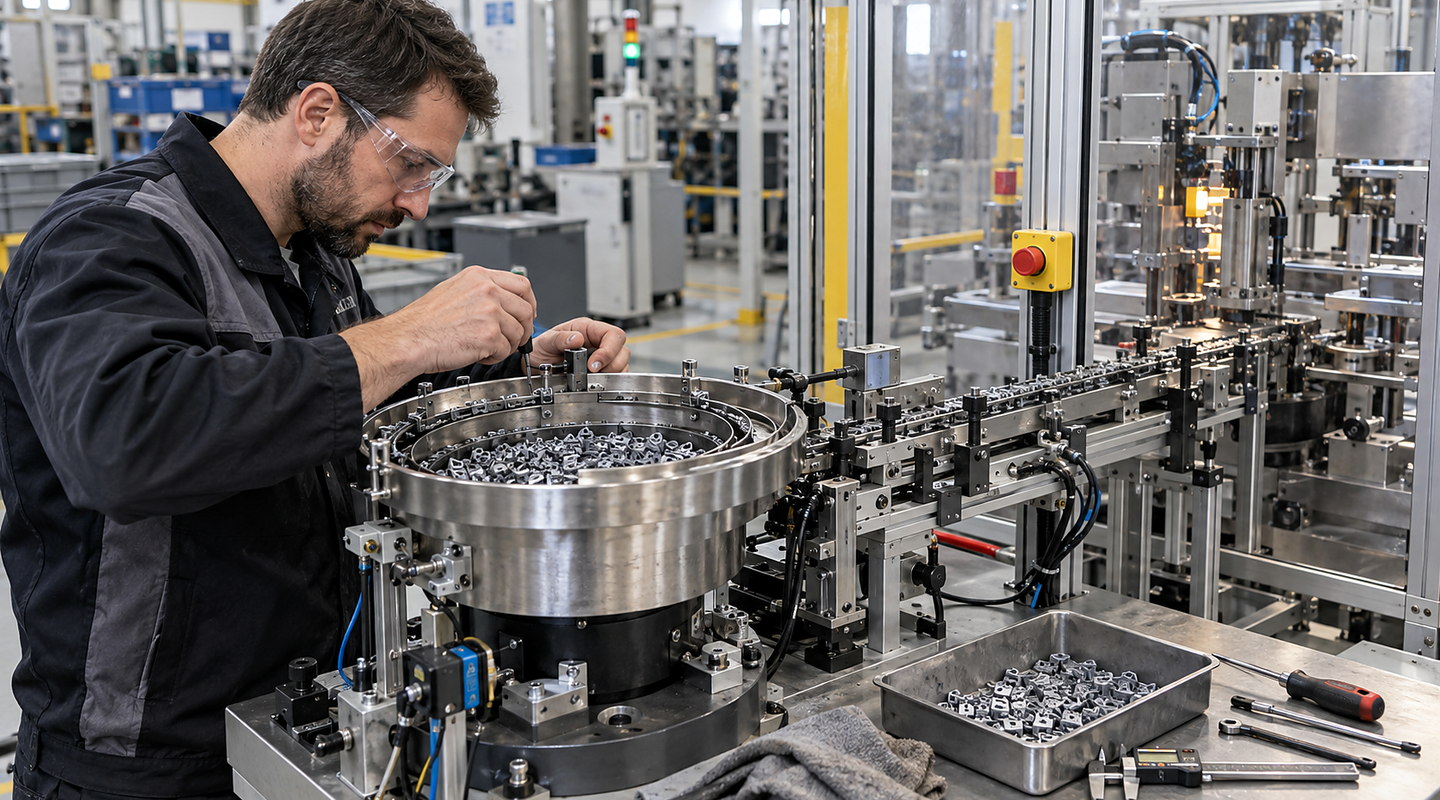
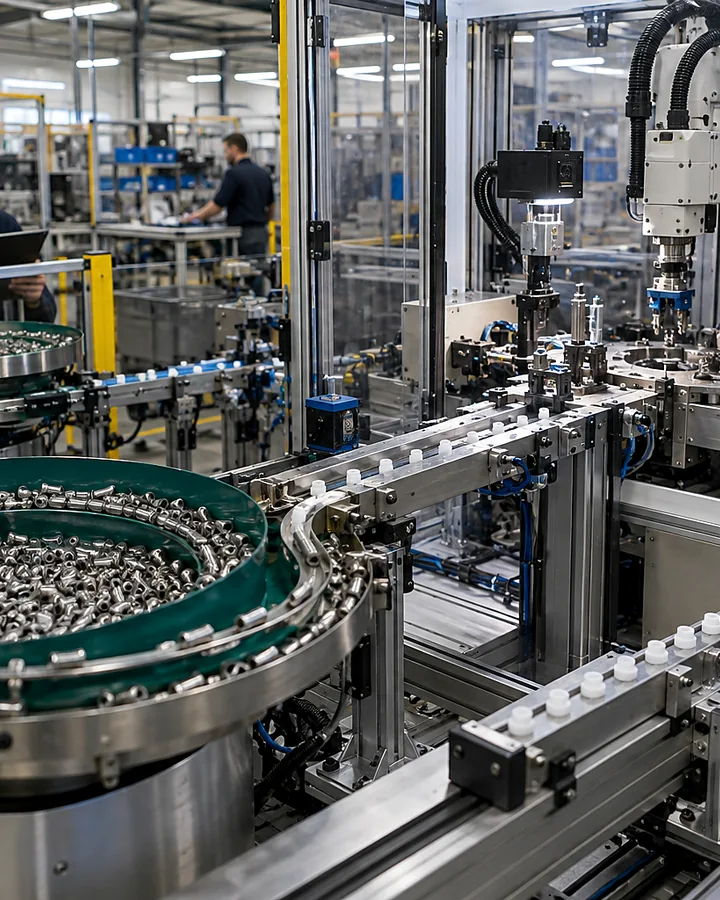
Component Geometry and Variation for Feeder Tracks & Presentation Tooling: Component sample trial
Define component drawings, tolerance range, permitted support features and final pick datum, then trial feeder-track transitions, accumulation and single-part release.
In brief
Track geometry starts with the required final pick datum and the component features permitted to support or locate the part. Provide drawings and samples spanning normal tolerances, finish, lubrication and supplier variations. Trial how that range behaves through transitions, accumulation and escapement release as the track fills and empties.
Turn your production information into clearer decisions — Feeder Tracks and Presentation Tooling
Plan feeder tracks and presentation tooling around real component variation, bulk condition, orientation, usable delivery rate and the downstream interface. Discuss representative part trials with Sorting Solutions. Use this guide to resolve component geometry and variation for feeder tracks & presentation tooling before it limits the final system.
Component Geometry and Variation for Feeder Tracks & Presentation Tooling: condition, range and effect on your process
Current condition
Record the component drawing revision, actual sample identity and condition, permitted support features and final receiving-tool datum. Note where the first deviation occurs if the existing track jams or presents the part incorrectly.
Realistic range
Include normal dimensional tolerances, finish, lubrication and supplier variation, with smallest and largest conditions represented. Assess transitions and release with full, draining and nearly empty tracks rather than one fill level.
Effect on the system
Show how component variation changes support, orientation, transition behaviour, accumulation and final pick position. Keep track settings, interchangeable pieces, escapement and receiving-tool arrangement identified to the same setup record.
Before you contact us
Five questions about component geometry and variation for feeder tracks & presentation tooling for your application
Who can confirm this information?Identify owners of component drawings, supplied samples, permitted contact surfaces and the receiving-tool datum. Retain revision and sample identity with the trial record.
How representative is the sample?Use normal production components with tolerance, finish, lubrication and supplier variation represented. Include parts that previously caused marking, jams or inconsistent final presentation.
What is the difficult condition?Include the component and track fill state that causes overlap, wedging, marking or pick-position error. Record where the first deviation appears before an authorised tooling change.
How will you judge the result?Agree final orientation and position, usable delivery, component-condition limits and recovery checks. Retain results for full, nearly empty, blocked-destination and interrupted-transfer conditions.
What else must be coordinated?Review the receiving-tool envelope, buffer, part-present sensing, release demand and variant tooling. Keep the track, escapement and receiving-tool setup consistent through changes.
Connected details
Review component geometry and variation for feeder tracks & presentation tooling as part of the complete system
Question 1
Component Geometry and Variation for Feeder Tracks & Presentation Tooling
Provide the component drawing and parts spanning normal dimensional tolerances. Identify the features permitted to support or locate the component and the final face, axis and position required by the receiving tool.
Question 2
Surface, Fragility and Entanglement Behaviour
Use components in their normal supplied condition, including finish, lubrication and supplier variation. Identify surfaces that must not be marked and check the delivered component after the complete track and release sequence.
Question 3
Bulk Condition and Replenishment Method
State the required buffer and how components enter and replenish the track. Trial transitions, accumulation and restart with a full track and as it empties, including the effect on the leading component.
Question 4
Required Orientation and Delivery Rate
Define the final orientation and usable delivery needed by the receiving process. Count components presented in the agreed pick position rather than treating movement along the rail as an accepted delivery.
Question 5
Escapement and Downstream Pick Interface
Show the receiving-tool envelope, final datum and part-present sensing. Assess the escapement for one-part release, no demand, a blocked destination and recovery after an interrupted transfer.
Question 6
Jam, Damage and Recovery Acceptance Checks
Record the sample condition and first point of deviation for jams, overlapping, wedging, marking or incorrect presentation. Retain the observed result and controlled recovery; a recurring jam does not by itself establish that a track needs widening or more drive.